

Toxicology is the discipline of asking what a harmful substance does to the body, how much of it, and what to do about it once you know. A working shelf for it is not one book but a stack built by role: the clinician who treats the poisoned patient, the researcher who measures the exposure, and the environmental scientist who stops the contamination at the source.
This guide rounds up seven toxicology titles currently available at MedicineeBook — a metal-biomarkers anchor, a kinetics handbook, a clinical text, a nanomedicine volume, a botanical atlas, a translational biomarkers book, and a remediation reference — so you can build the shelf for the job you are doing rather than the one you hope to get.
At a Glance: The 2026 Toxicology Reading List
| Resource | Format | Best for | Price |
|---|---|---|---|
| Biomarkers of Toxic Metals | Toxicology labs and researchers | $29.75 | |
| Handbook of Pharmacokinetics & Toxicokinetics | Clinicians dosing toxic exposures | $29 | |
| Medical Toxicology | Emergency and clinical toxicology | $24.99 | |
| Toxicology of Nanoparticles & Nanomaterials | Nanomedicine and risk assessors | $29 | |
| Exploring Poisonous Plants | Botanical and environmental safety | $19 | |
| Genomic & Epigenomic Biomarkers of Toxicology | Translational toxicogenomics | $23 | |
| Biotechnology for Toxicity Remediation | Environmental remediation | $30.90 |
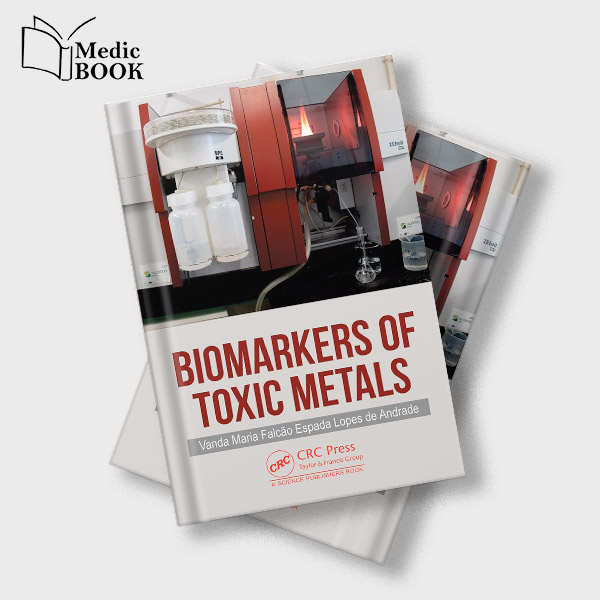
1. Biomarkers of Toxic Metals
This volume collects the measurable signature of metal exposure: the enzymes, proteins, and metabolites that signal lead, cadmium, mercury, and arsenic load before organ damage becomes obvious. For a lab or research group building a monitoring panel, it is the most direct reference in this shelf because it ties an analyte to a clinical threshold rather than a generic assay.
Use it when you need to justify which marker to run for a specific metal, or to defend a cutoff in a report. It pairs best with a handbook of kinetics so you can move from “we detected it” to “it is rising at this rate in the patient.”
$29.75
2. Handbook of Pharmacokinetics & Toxicokinetics, 2nd Edition
Toxicokinetics is the branch of pharmacokinetics that asks what a harmful substance does to the body rather than what the body does to a drug. This handbook covers absorption, distribution, metabolism, and excretion for the same routes a poisoner or a plant worker encounters: inhaled, ingested, dermal, and injected.
It is the backbone text here because it gives you the numbers that drive a dose-timing decision in the emergency department. Read it alongside the metal biomarkers text so the kinetics are anchored to a real, measurable analyte.
$29
3. Medical Toxicology
Written for clinicians who will actually sit across from the poisoned patient, this title covers the diagnosis and management of the common ingestions and exposures you will see on the floor. It is the pragmatic, bedside member of the shelf: antidotes, decontamination, and disposition.
Keep it close to the point of care. It does not replace a poison-control call, but it lets you anticipate the workup and the monitoring panel before that call happens, which shortens the time to the right antidote.
$24.99
4. Toxicology of Nanoparticles & Nanomaterials in Human
As nanomaterials move from the lab into medicine and consumer products, their risk profile has to be understood before scale-up. This book examines how particle size, surface chemistry, and dose change the toxic outcome, and what that means for the terrestrial and aquatic systems that absorb it.
It is the forward-looking entry: valuable if your exposure question involves engineered particles rather than a traditional industrial chemical. It is a newer literature, so treat specific claims as moving targets.
$29
5. Exploring Poisonous Plants: Medicinal Values, Toxins, and Uses
A large part of everyday poisoning is botanical. This atlas maps the plants that carry both therapeutic value and toxic risk, describing the compounds responsible for each side and how the two can coexist in the same species.
It is the most accessible text on the list and a good starting point for students and for field identification. It will not replace a clinical toxicology reference, but it explains why a “remedy” can be the poison.
$19
6. Genomic & Epigenomic Biomarkers of Toxicology and Disease
This title moves up the ladder from “what level of metal” to “how does the genome respond.” It surveys the markers by which a toxicant leaves its mark: mutated sequence, altered gene expression, and epigenetic changes that persist after the exposure ends.
Choose it when your work is translational or epidemiologic rather than bedside. It is the most research-heavy entry here and the least useful to a clinician managing an acute case.
$23
7. Biotechnology for Toxicity Remediation & Environmental Sustainability
Where the other titles look at the body, this one looks at the environment and asks how contaminated media can be cleaned. It reviews the biotechnologies – microbial, enzymatic, and plant-based – that remediate toxicity at the source rather than treating it downstream.
It is the applied-closing entry of the shelf, useful for anyone whose toxicology work is in an environmental or regulatory role. It does not treat patient exposure.
$30.90
How to Choose: Matching the Resource to Your Goal
You are building a metal monitoring panel: lead with Biomarkers of Toxic Metals and anchor the kinetics with the pharmacokinetics handbook. The two together cover detection and time course.
You manage acute poisonings at the bedside: keep Medical Toxicology within arm’s reach and use Exploring Poisonous Plants when the source is a plant the patient has not identified.
You work in environmental or translational toxicology: the genomic biomarkers and remediation titles belong on your shelf, not the emergency one.
What Not to Buy: Common Mistakes
Buying a kinetics handbook for a single case. Pharmacokinetics texts are for the person who will make the dosing or monitoring decision; for a one-off exposure a poison-control call is faster and safer than reading it.
Choosing the newest research title for a clinical question. Nanoparticle and genomic-toxicogenomics books report early, evolving findings. Cite them for direction, not for a patient recommendation.
Skipping the anchor text. A toxicology shelf without a metal-biomarkers or a clinical toxicology anchor means you can detect an exposure but cannot interpret it. Buy the anchor first, add the specialists after.
Frequently Asked Questions
Which toxicology text should a student read first?
Start with Medical Toxicology for the clinical frame, then Exploring Poisonous Plants for the most common everyday exposures. The kinetics handbook comes in once you are applying the concepts to a case.
Is a pharmacokinetics handbook the same as a pharmacology textbook?
No. It isolates the ADME (absorption, distribution, metabolism, excretion) math for harmful substances, not for drug development or therapeutic dosing in the general sense.
Do any of these cover chronic low-dose exposure?
The metal-biomarkers and the genomic/epigenomic titles do, more than the acute clinical ones. For chronic occupational exposure the biomarkers text is the most directly useful.
Are these print books or PDFs?
Every title here is delivered as a publisher PDF in the store, so you search, bookmark, and annotate digitally. Check each listing for the edition and page count.
What edition should I pick where several exist?
Pick the most recent edition listed for the core handbooks. For research-frontier titles, the edition matters less than whether the literature is current; read the preface to see the cutoff.
Can I combine two of these into a single research question?
Yes – the metal-biomarkers text plus the genomic-biomarkers text is a natural pairing for a study that measures the analyte and then reads its molecular response.
Which of these is the most bedside?
Medical Toxicology is the one you keep at the point of care; it is written for the clinician who will sit across from the poisoned patient, and the others serve it from the research and environmental side.
Is a botanical atlas enough for a poisoning case?
No. Exploring Poisonous Plants identifies the source and its compounds, but the clinical management – antidote, decontamination, monitoring – lives in Medical Toxicology. Use the two together, not one alone: the atlas tells you what was taken in and the clinical text tells you what to do about it, and a complete poisoning workup needs both halves.
Where does the nanotoxicology title sit in the shelf?
It is the forward-looking research entry, aimed at engineered particles rather than the traditional industrial chemical. Read it for the direction the field is moving; it will not answer a bedside question the clinical toxicology book was written for, and the two serve different readers entirely.
Additional Resources
For students building a broader library, these resources round out what the catalog covers:
- NeedeBook — student e-books and study guides.
- UniversityEbook — university ebooks.
- eTextBookUniversity — university eTextBooks.
- NCBI (NIH) — research and reference database.
- Wikipedia — background reference.

