Toxicology splits itself the moment you try to book it. The emergency physician needs clinical medical toxicology — the poisons, the antidotes, the decontamination sequence. The occupational scientist needs the dose-response curve and the biomarker panel. The environmental researcher wants remediation technology. The clinician treating plant-related poisoning wants the botanical reference. These are different jobs, and the books on a toxicology shelf are different objects even when they share one spine.
This guide sorts seven toxicology resources at MedicineeBook by the job they do: clinical medical toxicology at the anchor, the toxicokinetics handbook as the quantitative spine, two biomarker volumes for the lab and genomic side, a nanoparticle volume for the applied research reader, a botanical reference, and a bioremediation text. Each entry states up front where the book starts and where it stops.

At a Glance: The 2026 Toxicology Reading List by Job
| Resource | Format | Best for | Price |
|---|---|---|---|
| Medical Toxicology | PDF (clinical text) | Emergency physicians and toxicology trainees | $24.99 |
| Handbook Of Pharmacokinetics And Toxicokinetics, 2nd Edition | PDF (handbook) | Toxicologists and pharmacologists needing the quantitative core | $29 |
| Biomarkers Of Toxic Metals | PDF (research book) | Clinical and environmental toxicology labs | $29.75 |
| Genomic And Epigenomic Biomarkers Of Toxicology And Disease | PDF (research book) | Toxicogenomics and molecular-exposure researchers | $23 |
| Toxicology Of Nanoparticles And Nanomaterials In Human | PDF (applied research) | Nanotechnology and materials-toxicology researchers | $29 |
| Exploring Poisonous Plants: Medicinal Values, Toxicity Responses, and Therapeutic Uses | PDF (botanical reference) | Clinicians and herbal-medicine-aware practitioners | $19 |
| Biotechnology For Toxicity Remediation And Environmental Sustainability | PDF (environmental text) | Environmental health and remediation professionals | $30.90 |
1. Medical Toxicology
Medical Toxicology is the anchor of the shelf: the clinical reference for poisonings and drug overdoses, organized for the way an emergency clinician actually works — by agent, by mechanism, by the decontamination and antidote decision that has to be made in the next hour.
The clinical framing is what separates it from the research volumes on this shelf. It is the book you want open when the toxicology consult comes in at night, not when you are designing an assay.
Honest caveat: as a clinical reference, it is only as good as its update cycle. Check the edition’s currency against the poisons most common in your region before you rely on it as your sole clinical reference.
$24.99
2. Handbook Of Pharmacokinetics And Toxicokinetics, 2nd Edition
The Handbook of Pharmacokinetics and Toxicokinetics, 2nd Edition, is the quantitative spine: absorption, distribution, metabolism, and excretion, and the toxicokinetic extensions that make dose-response readable. It is the book that turns a list of poisons into a calculable problem.
For anyone whose work involves dose reconstruction, exposure assessment, or the interpretation of biomonitoring data, this is the reference that makes the numbers meaningful. The second edition updates the kinetic models against current practice.
It is a handbook, not a course. Expect to use it chapter by chapter against a real case rather than to read it through in one sitting.
$29
3. Biomarkers Of Toxic Metals
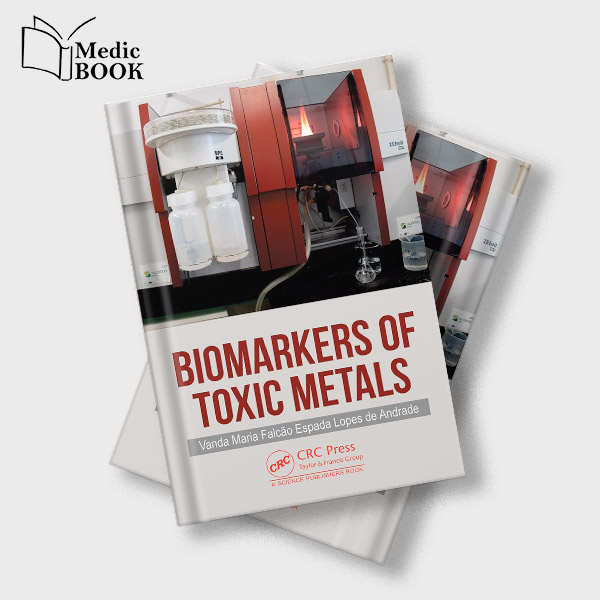
Biomarkers of Toxic Metals covers the detection and interpretation side: which metals matter, how they are measured, and what the marker means for exposure and effect. It is the volume that connects a lab result to a clinical or environmental conclusion.
It is the right book for the lab side of the shelf — the toxicologist who runs or interprets the panel, not the emergency clinician who just needs the antidote. The clinical text on this shelf is the patient’s book; this one is the panel’s book.
Scope note: it is a biomarker volume, so the exposure assessment and dose-response work sits in the toxicokinetics handbook, not here.
$29.75
4. Genomic And Epigenomic Biomarkers Of Toxicology And Disease
Genomic and Epigenomic Biomarkers of Toxicology and Disease covers the molecular layer: DNA adducts, epigenetic change, and the genomic readout that has become the modern exposure biomarker. It is where the shelf meets the -omics end of the field.
It matters because the exposure question in toxicology has moved from ‘how much got in’ to ‘what did it do to the genome’, and this text is the bridge between the two framings. The therapeutic-actions framing makes it useful beyond pure research — it speaks to the patient as well as the lab.
It is a specialized volume. If you need a working toxicology practice, the clinical text and the PK handbook do the daily work; this one is the molecular add-on.
$23
5. Toxicology Of Nanoparticles And Nanomaterials In Human
Toxicology of Nanoparticles and Nanomaterials in Humans addresses the new exposure class: nano-scale materials, the ways their toxicity differs from bulk chemistry, and the terrestrial and aquatic systems the materials move through. It is the applied-research anchor of the shelf.
It belongs on the shelf because nanomaterials are now in consumer and medical products, and the field’s public health question is whether the existing exposure framework holds at the nano scale. The book takes that question seriously, in both directions.
The reader is the researcher, not the clinician. If you are treating a poisoning, this is not your book; it is the book that builds the evidence for what you are treating.
$29
6. Exploring Poisonous Plants: Medicinal Values, Toxicity Responses, and Therapeutic Uses
Exploring Poisonous Plants: Medicinal Values, Toxicity Responses, and Therapeutic Uses is the botanical reference on the shelf: which plants poison, through which compounds, and where the same plant’s therapeutic and toxic doses sit. It is the volume the emergency clinician reaches for when the history says ‘plant’.
Its strength is the dual framing — medicinal value and toxic response in the same entry — which is exactly how a treating clinician has to think about a plant ingestion, where the same dose that treats in one context poisons in another.
It is a reference, not a first-aid manual. For an acute ingestion, follow your national poison-control protocol; the book is the identification and mechanism layer behind that protocol.
$19
7. Biotechnology For Toxicity Remediation And Environmental Sustainability
Biotechnology for Toxicity Remediation and Environmental Sustainability closes the loop on the shelf: the applied side of cleaning up contamination with biotechnology, and the sustainability metrics that decide whether a remediation strategy is worth running.
It is the environmental-health job’s book — the counterpart to the clinical text, which is the patient’s job. For a career split between the two, owning both is the deliberate, correct move.
As with the other research volumes here, it is a methods text: pair it with your regulator’s current standards when you are advising a specific site.
$30.90
How to Choose: Matching the Resource to Your Goal
Emergency and clinical toxicology track. Own Medical Toxicology as the anchor and keep the poisonous plants reference for the ingestion cases. Add the toxicokinetics handbook when your work moves from ‘what did they take’ to ‘how much, and when will it clear’.
Occupational or environmental exposure science. The toxic metals biomarker volume plus the genomic and epigenomic markers text are your two detection spines; the bioremediation book is the applied counterpart when the question becomes cleanup rather than measurement.
Nanotechnology and new-materials research. Lead with Toxicology of Nanoparticles and keep the two biomarker volumes as the measurement layer underneath the exposure question.
What Not to Buy: Common Mistakes
Buying a nanoparticle or -omics volume before your PK fundamentals are solid. The newest research layers on the shelf assume the dose-response and kinetic base. If the base is shaky, the advanced volume is decoration, not tool.
Treating the poisonous plants book as a clinical antidote guide. It is an identification and mechanism reference. Acute ingestions run through your poison-control protocol first; the book explains what the protocol is treating, it does not replace the protocol.
Buying the PK handbook to learn the poisons themselves. It is the quantitative spine — the math of exposure — not an agent-by-agent clinical reference. For the agents and their treatments, the clinical medical toxicology text is the right book; the handbook is the layer that makes your exposure math correct.
Frequently Asked Questions
Are the clinical and PK books complementary or redundant?
Complementary, at different layers. Medical Toxicology is the agent-and-treatment reference; the PK handbook is the quantitative spine that tells you how much moved and when. A clinician owns both; the handbook is used per case, not read straight through.
Which volume covers occupational exposure?
The two biomarker volumes — toxic metals and genomic/epigenomic markers — are the detection layer for exposure assessment, with the bioremediation text as the applied cleanup counterpart. None of them is an occupational-health regulations book; pair them with your national standards.
Can I use the biomarker volumes in my own lab?
They are interpretation and detection references, which is the right use. For bench protocols and assay validation, you will still want the primary methods literature; these volumes tell you what the numbers mean, not how to run the assay.
Is the nanoparticle book clinical or environmental?
It is applied research, straddling both. The reader is the researcher designing the exposure study, not the clinician treating a poisoning. If you treat nano-related cases, your clinical anchor is the medical toxicology text, and the nanoparticle volume is the evidence base behind it.
Which book should I open first on a plant poisoning?
Your national poison-control protocol first, always. Then Exploring Poisonous Plants for identification and the mechanism — which plant, which compound, and why the dose that treats in one context poisons in another.
Does the shelf cover antidotes and antivenoms?
The clinical Medical Toxicology text is where antidote logic lives, organized by agent and mechanism. For antivenoms specifically, check the edition’s currency against your region’s available products, because antivenom availability is jurisdiction-specific and moves faster than print cycles.
Additional Resources
For students building a broader library, these resources round out what the catalog covers:
- NeedeBook — student e-books and study guides.
- UniversityEbook — university ebooks.
- eTextBookUniversity — university eTextBooks.
- NCBI (NIH) — research and reference database.
- Wikipedia — background reference.