Few specialties reward image-based thinking as much as radiology. Yet the word ‘imaging books’ covers a wide spread of needs: the physics behind every modality, the interpretation of fetal and pediatric brains, the hand skills of interventional pain, and the atlas work of echocardiography. Picking the wrong volume for your stage wastes a year of study.
This guide covers seven radiology and medical imaging resources currently listed at MedicineeBook — a premium fetal and pediatric neuroradiology text, an interventional pain case book, two ultrasound atlases, a transesophageal echocardiography atlas, an imaging-physics core, and a methods book on biomedical image understanding. Each entry is matched to a realistic use case, with honest caveats about where each book falls short.
At a Glance: The 2026 Radiology & Imaging Reading List
| Resource | Format | Best for | Price |
|---|---|---|---|
| Fetal, Neonatal And Pediatric Neuroradiology 1st edition | PDF (textbook) | Fetal, neonatal and pediatric neuroradiology trainees | $34.99 |
| Advanced Pain Management In Interventional Radiology | PDF (case-based) | Interventional radiologists and pain-management trainees | $28.60 |
| Biomedical Image Understanding: Methods and Applications | PDF (methods book) | Biomedical engineers and imaging-research students | $29 |
| 3D Ultrasound In Prenatal Diagnosis : A Practical Approach , 2nd Edition | PDF (practical atlas) | Obstetricians and sonographers focused on fetal imaging | $32.45 |
| Hendee’s Physics of Medical Imaging, 5th Edition | PDF (core text) | Any radiology or imaging trainee building physics fundamentals | $25 |
| Endoscopic Ultrasonography , 4th Edition | PDF (textbook, 4th ed.) | GI and upper-abdomen clinicians using EUS | $26 |
| The Art Of 2D Transesophageal Echocardiography | PDF (atlas) | Cardiac anesthesiologists and echo lab trainees | $20.80 |
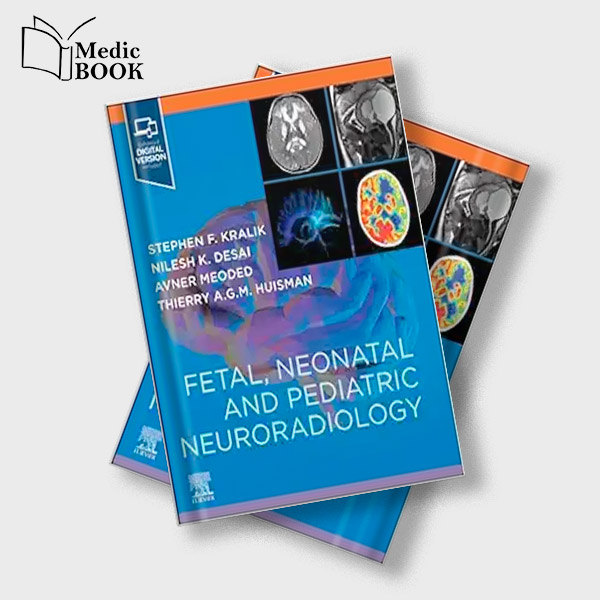
1. Fetal, Neonatal And Pediatric Neuroradiology 1st edition
This is the premium anchor of the shelf: a dedicated text on Fetal, Neonatal and Pediatric Neuroradiology from the publisher, covering congenital anomalies of the brain, postnatal imaging of neonates, and the MR and CT techniques that make pediatric neuroimaging different from adult practice.
The value of a dedicated pediatric CNS reference is specificity. Adult neuroradiology knowledge does not transfer cleanly: the developing myelination timeline, normal variants in infants that mimic disease, and the small-dose protocols used in children all need their own treatment. The text works as a structured second resource rather than a first pass.
Be honest about scope: if you work in adult stroke or adult neuro-oncology, this book will feel narrow. It is built for the fetal-neonatal-pediatric continuum, so pair it with your general neuroradiology core before diving in.
$34.99
2. Advanced Pain Management In Interventional Radiology
Advanced Pain Management in Interventional Radiology takes a case-based approach to interventional pain procedures: vertebral interventions, facet and medial branch blocks, radiofrequency ablation, intrathecal systems, and neuromodulation. Case framing makes it one of the more usable procedural volumes on the shelf.
The case format matters because interventional pain is a judgment-heavy specialty. A pure atlas tells you where the needle goes; a case book forces you through the reasoning chain — which block, which ablation level, when to escalate from radiofrequency to intrathecal therapy. That chain is what examiners and consultants test.
The caveat is the same as with any interventional book: procedural volume and supervised practice cannot be replaced by reading. Use this to build the mental map, then confirm technique in the lab. The included video references are the strongest part of the package.
$28.60
3. Biomedical Image Understanding: Methods and Applications
Biomedical Image Understanding: Methods and Applications is the research-side of this shelf. It covers image processing, feature extraction, segmentation, and the fundamentals of deep-learning approaches to medical images.
It is not written for the bedside clinician. If your goal is to interpret or report studies, skip it. If you are an engineer, a research resident, or a student building a detection or segmentation pipeline, it gives you the vocabulary and the methodical structure that application-oriented courses often compress.
The honest limitation: the field moves quickly, so treat this as a foundation text and pair it with current conference papers when you design or benchmark a system.
$29
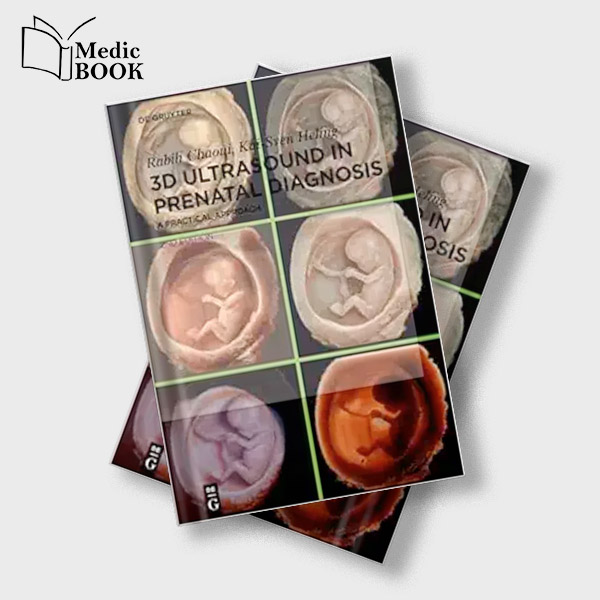
4. 3D Ultrasound In Prenatal Diagnosis : A Practical Approach , 2nd Edition
3D Ultrasound in Prenatal Diagnosis, 2nd Edition is a practical approach to volume imaging in obstetrics: when 3D and 4D acquisitions add information, which structures they image well, and how to read them without over-calling artifacts.
The second edition matters here — 3D/4D probes have improved resolution and surface-rendering speed, and a current edition keeps the examples close to what a modern cart actually produces. Use it as a technique companion while you build volume scanning hours.
Caveat: clinical interpretation of abnormal fetal anatomy should always be confirmed in a high-volume fetal center. A book is a map, not a second opinion, and 3D images in particular invite over-reading when volumes are reconstructed at suboptimal settings.
$32.45
5. Hendee’s Physics of Medical Imaging, 5th Edition
Hendee’s Physics of Medical Imaging, 5th Edition is the classic core: X-ray and CT formation, MRI physics, ultrasound propagation and Doppler, nuclear medicine, and the safety and dose considerations that tie them together. If you own only one physics text, this is the one.
It is written for the whole diagnostic-imaging field, which makes it the natural first purchase on this shelf. The fifth edition keeps the mathematics at a level a non-engineer can follow while still being rigorous enough for board-style questions on beam quality, contrast-to-noise, and specific absorption rate.
The trade-off is density. Reading it cover to cover on a busy residency is how people start three textbooks and finish one. Work the chapters that match your rotation schedule instead.
$25
6. Endoscopic Ultrasonography , 4th Edition
Endoscopic Ultrasonography, 4th Edition is the practical EUS reference: technique, layer-by-layer reading of the GI wall, pancreatic and biliary applications, and the intervention procedures performed under EUS guidance.
EUS sits in a gray zone between gastroenterology and interventional radiology, which is why a dedicated EUS text earns its place even for clinicians who order rather than perform. The layer anatomy and the staging workups are the chapters you return to most.
Be aware that probe generations move faster than print editions. The book’s principles are stable, but if you are training on the newest echoendoscopes, cross-check image examples against your own lab’s output.
$26
7. The Art Of 2D Transesophageal Echocardiography
The Art of 2D Transesophageal Echocardiography is an atlas that pairs each 2D TEE window with its anatomical and surgical correlation. For clinicians who do intraoperative or procedural TEE — cardiac anesthesia, valve procedures, post-op surveillance — that correlation layer is the whole point.
Transesophageal imaging is view-by-view in a way transthoracic imaging rarely is, and this book is organized that way too. It is a strong bedside companion for anyone who performs or closely reads TEE during procedures.
Honest caveat: TEE is a hands-on modality. The atlas will improve your eye for views and normal variants, but probe manipulation, patient tolerance, and image optimization live in the lab, not in the pages.
$20.80
How to Choose: Matching the Resource to Your Goal
Building your diagnostic physics foundation? Start with Hendee’s Physics of Medical Imaging as the spine, and keep Biomedical Image Understanding on the shelf only if you are the engineer in the group rather than the clinician.
Training in interventional or pain radiology? The Advanced Pain Management case book is your mental map; pair it with supervised lab time. For the GI end of interventional practice, add Endoscopic Ultrasonography.
Obstetric or fetal-imaging track? Lead with 3D Ultrasound in Prenatal Diagnosis, and move to Fetal, Neonatal and Pediatric Neuroradiology when your work crosses into the CNS. Cardiac anesthesia and echo-lab readers belong on the 2D TEE atlas.
What Not to Buy: Common Mistakes
Buying a niche atlas before a broad core. A dedicated EUS or TEE text is useless if your imaging physics fundamentals are shaky. One core physics book before two narrow atlases — the narrow book amplifies what you already know, it does not build the base.
Treating the image-understanding book as a clinical reference. Biomedical Image Understanding is a methods text for engineers and researchers. Buying it because the title says ‘medical image’ and expecting to interpret studies is the most common mismatch on this shelf.
Skipping dose and safety chapters to save time. The fastest way to make a radiology error is to know anatomy and ignore physics. Work through the dose, contrast, and safety sections of the physics text even if you ‘already know’ the modality.
Frequently Asked Questions
What is the difference between an ‘Original PDF from Publisher’ and a ‘True PDF’ listing in the store?
Both refer to the publisher’s own files rather than scans or re-typeset copies; ‘True PDF’ is the store’s label for volumes delivered as exact publisher PDFs. In practice, the reading experience is the same — vector text, searchable, and faithful to the edition.
I’m starting diagnostic radiology residency. Which single book should I buy first?
Buy the physics core first — Hendee’s Physics of Medical Imaging. Every rotation you will hit modality questions, and the physics book is the one that pays rent on itself for the longest period of your career.
Is Hendee’s appropriate for board-style physics questions?
Yes, it is written at the level of radiology board and residency-level questions. The mathematics is kept approachable, which is exactly what you want when the exam asks you to reason about beam quality or SNR rather than derive it.
The EUS text is a 4th edition. Is that current enough with modern echoendoscopes?
The principles, layer anatomy, and staging workups are stable across editions, but image examples drift. Use the book for the framework and cross-check against your own system’s live images, especially for newer probe generations.
Should I buy both 3D ultrasound and the TEE atlas?
They serve different readers. 3D ultrasound belongs to obstetrics and fetal imaging; the TEE atlas belongs to cardiac anesthesia, echo labs, and procedural cardiology. Choose by where your hours actually go.
Do these texts replace an interventional or procedural course?
No. The case-based and atlas volumes build your mental map and your eye; the hand skills — probe control, needle discipline, radiation technique — only come from supervised procedure volume. Read the book, then log cases.
Additional Resources
For students building a broader library, these resources round out what the catalog covers:
- Univebook — university book collection.
- eTextBooky — eTextBooks for students.
- Mylibpdf — PDF library.
- NCBI (NIH) — research and reference database.
- Wikipedia — background reference.